
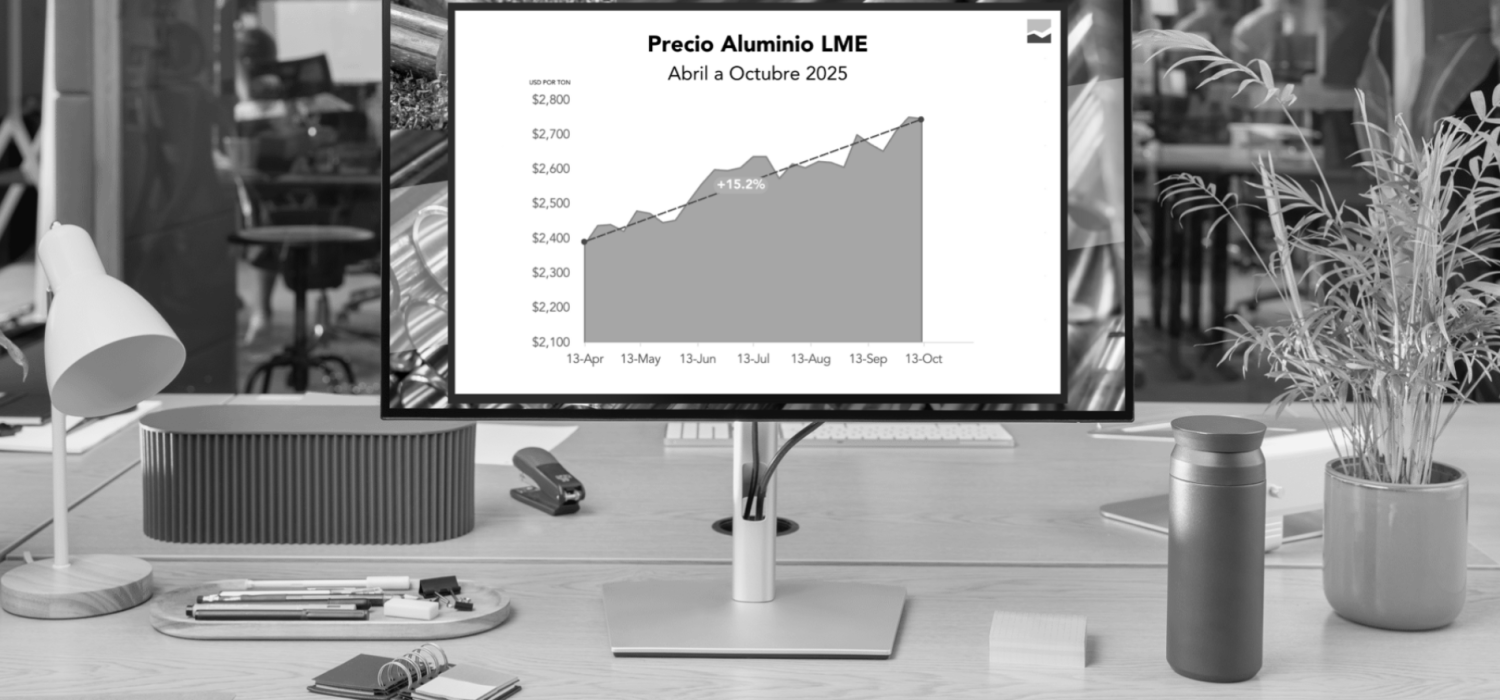
Updated aluminum market outlook 2025

As illustrated in the chart above, aluminum prices on the London Metal Exchange (LME) increased by 15.2% between April and October 2025, reaching around USD 2,750 per ton by the end of the period. This steady recovery reflects renewed demand from the automotive and construction sectors, as well as tighter supply due to production cuts in key regions such as China and Europe.
Higher energy costs, especially natural gas and electricity, have also influenced smelting margins, reinforcing upward pressure on prices. Meanwhile, inventories at LME warehouses have remained relatively stable, indicating balanced market fundamentals.
For industrial consumers and producers, this scenario underscores the importance of maintaining active hedging strategies. Through futures and swaps, companies can lock in prices and protect margins against potential volatility heading into 2026. While the recent upward trend suggests a healthier market, fluctuations linked to macroeconomic conditions and policy changes in major economies remain likely.
Aluminum prices last year
In August 2024, the price of aluminum market rose due to a combination of factors affecting both supply and demand. Production in China, which accounts for more than half of the global supply, faced restrictions from new environmental policies and energy issues.
This limited availability in the market, while demand increased in sectors like construction and green technologies, including electric vehicles and renewable energy. Additionally, declining global inventories and investor speculation pushed the price of aluminum above $2,500 per ton at times.

The aluminum market is known for its volatility, which can create challenges for producers, consumers, and investors alike. Financial hedging is a key tool that helps protect against unexpected price changes, providing greater stability and predictability in costs and profits.
What is financial hedging?
Financial hedging is a strategy used to reduce or eliminate the risk of unfavorable price movements in an asset. For aluminum, hedging aims to protect companies from price fluctuations, ensuring more predictable costs and avoiding potential losses.
Financial instruments for aluminum hedging
- Futures Contracts:
Futures contracts are agreements to buy or sell aluminum at a specified price on a future date. These contracts are widely used to lock in prices and secure a stable value for aluminum, protecting against market volatility. - Financial Options:
Options, both calls (buy) and puts (sell), give the right but not the obligation to buy or sell aluminum at a specific price in the future. They are useful for those seeking insurance against adverse price movements while retaining the flexibility to benefit if the market moves in their favor.
Key aluminum markets
- London Metal Exchange (LME):
The LME is the primary global market for metal pricing, including aluminum. It offers a variety of contracts that allow market participants to secure prices and manage risk effectively. - Shanghai Futures Exchange (SHFE):
The SHFE is the leading market in Asia for aluminum trading. Similar to the LME in operation, the SHFE is particularly relevant for those involved in the Asian market, offering an alternative for hedging in this region. - Midwest Premium (MWP):
In Mexico, some companies use the Midwest Premium as a reference to determine aluminum costs. This index reflects the additional costs associated with supplying and delivering aluminum in the Midwestern United States and is a key component for pricing aluminum contracts in this area.
Direct hedging example
A direct hedge involves using futures or options contracts to directly protect against aluminum price fluctuations. For example, a producer might sell aluminum futures to secure a fixed selling price, avoiding the risk of a price drop.
Important considerations when implementing hedging strategies
- Associated costs:
Hedging involves costs, such as option premiums or margin requirements for opening futures positions. It’s important to assess whether these costs are reasonable in relation to the desired level of protection. - Residual risk:
Despite hedging, there is always residual risk that cannot be completely eliminated. Understanding this risk and having a plan to manage it is crucial. - External factors:
Changes in demand, production, and trade policies can affect aluminum prices. Monitoring these factors helps in adjusting hedges as needed.
Legal and regulatory aspects
- Regulatory Compliance:
In the United States, the futures market is highly regulated by the Commodity Futures Trading Commission (CFTC), which oversees the activities of financial institutions participating in these markets. Only entities registered as FCMs (Futures Commission Merchants) and other authorized financial institutions, such as banks and brokers, are permitted to operate in this market. These entities must meet strict capital, governance, and risk management requirements, ensuring market integrity and investor protection. They must also adhere to the regulations of the National Futures Association (NFA), which sets conduct standards and supervises trading activity. - Legal Aspects:
Participating in the U.S. futures market requires a deep understanding of the legal aspects involved. Futures contracts are legally binding instruments that clearly define the obligations of the parties, including exercise prices, expiration dates, and delivery or settlement terms. Companies must carefully review these contracts to ensure they align with their hedging objectives and do not present unexpected risks. Additionally, they must consider tax implications, as gains and losses from futures are treated specifically under U.S. tax law, which can significantly impact accounting and tax planning. - Accounting Considerations:
Accounting for hedging operations in the U.S. futures market must adhere to the standards set by the Financial Accounting Standards Board (FASB), which dictates accounting and financial reporting under GAAP (Generally Accepted Accounting Principles). It’s essential for companies to correctly designate their futures operations as hedging instruments under hedge accounting, which involves regularly evaluating the effectiveness of the hedge. Failure to comply with these standards can result in significant accounting adjustments, affecting the accuracy of financial statements and investor perception.
Financial hedging in the aluminum market helps mitigate risks and ensure stability in a price-volatile environment. Understanding and applying these tools effectively can make a significant difference in managing market risks.
For more information, feel free to visit our blog or contact us.

